Receive the Holy Spirit

“As the Father has sent me, I am sending you.” And, with that, he breathed on them and said, “Receive the Holy Spirit.” ~John 20:21-22

As the Father has sent me, I am sending you. I am sending you to do the things I’ve done in all the ways I’ve done them. I’m commissioning you to heal the sick and proclaim the Kingdom of God. I’m charging you to turn the other cheek and go the extra mile and love your enemies and pray for those who persecute you. As the Father has sent me, I am sending you.

We do not have the abilities on our own to do what Jesus did in the ways he did them. We are the Body of Christ, the real, physical, flesh-and-blood presence of Jesus in this world. That’s the call. That’s the charge. That’s the whole point of the Church. That’s the mission.

But how?

We can’t.

He knows. He breathes on us and says, “Receive the Holy Spirit.”

The Holy Spirit transforms our inabilities. God’s Spirit teaches us things we could never come up with on our own. The Bible says no one can even make the Christian confession, Jesus is Lord, except by the Holy Spirit. The Spirit transforms our inabilities and gives us the gifts and the powers to do things we just can’t do by ourselves.

“The Holy Spirit, whom the Father will send in my name, will teach you all things and will remind you of everything I have said to you.” ~John 14:26

“Do not worry beforehand about what to say. Just say whatever is given you at the time, for it is not you speaking, but the Holy Spirit.” ~Mark 13:11

No one naturally loves his enemies. No one naturally turns the other cheek. Nobody naturally lays down her rights or would rather be wronged than fight. But Jesus says those are the things that separate his followers from just good people. Those are the things that are required if we are to be his Church. So the Holy Spirit infuses us with the power to do it. The Spirit forms in us the character traits we need to live like our Lord. He gives us strength so we can follow his way of weakness. He gives us power so we can take care of the helpless. He gives us peace so we can endure the hostility.

If being a Christian is just about being nice and giving to charity and not cussing too much, you don’t need the Holy Spirit for that!

But the Church is following Jesus. And you can’t really follow him–I can’t, you can’t, we can’t–without the fellowship of the Spirit who transforms our inabilities and provides us the power to live like people without the Spirit don’t. Can’t.

The Holy Spirit will teach you. The Holy Spirit will remind you. The Holy Spirit will give you.

And it takes time. This kind of transformation doesn’t happen overnight. It’s a process. Sometimes it feels like it’s happening and sometimes it doesn’t feel like anything is happening. And it’s hard to measure. God doesn’t send out quarterly reports. But we know his Spirit is working on us. We know we are being changed.

“We all reflect the Lord’s glory and are being changed into his likeness with ever-increasing glory, which comes from the Lord, who is the Spirit.” ~2 Corinthians 3:18

~~~~~~~~~~~~~~~~~~~~~~~~

The 25th Annual Four Horsemen weekend for me and the three men God has used–is still using!–to shape me the most begins with lunch tomorrow at Dan’s home in Garland and then two nights of camping at Cooper Lake in East Texas. I thank God for these three great friends: for Dan’s unquenchable encouragement and contagious hope, for Kevin’s curiosity and reflection and everlasting support, and for Jason’s constant consistent in-the-trenches-with-me brotherly love. I can’t wait to see these guys. We will mercilessly rip each other to shreds and selflessly lift one another up to the Lord in prayer. We will eat good food, throw rocks at raccoons, hike the lakeside trails, exaggerate our stories, one of us will almost be killed, and we will gut-laugh the whole time.

Twenty-five years. The Silver Soiree. Kevin, we might have to revive the historic Chilean Sea Bass. And stop right there.

Peace,
Allan

The Greatest Need

“The greatest need for our times is fellowship, the call simply to be the church, to love one another, and to offer our lives for the sake of the world. The creation of living, breathing, loving communities of faith at the local church level is the foundation of all the answers. The community of faith incarnates a whole new order, offers a visible and concrete alternative, and issues a basic challenge to the world as it is. The church must be called to be the church, to rebuild the kind of community that gives substance to the claims of our faith.”

~ Jim Wallis, Call to Conversion, 1982

Body of Christ: Transformation

My bracket is set and I’m ready to start defending my Stanglin Family March Madness Bracket Racket title. I’ve got Texas, Texas A&M, and Texas Tech winning only one game each. I’ve picked Houston, again, to win the national championship. My Final Four is Houston, Duke (gag), Arizona, and Iowa State. The winner gets a celebratory dinner at his/her place of choice and his/her bracket proudly displayed on the refrigerator for a full year.

~~~~~~~~~~~~

We’ve been hammering home the point this week that if anybody is going to meet Jesus today, they’re going to meet him through the Church, the Body of Christ. That’s how our Lord designed it. We are his eyes and mouth and ears, we are his hands and feet, his physical presence in this world. We live our lives as individual disciples and together as his followers in imitation of him so people around us can experience Jesus, so they can see him for who he really is.

Except…

I know the Church. I know the Church and all its weaknesses. I am one of the Church’s weaknesses. I sometimes can be a reason people don’t see Jesus. To some extent, all of us are capable of behaving in ways that might hide the Body of Christ from others or, at worst, behaving in ways that are the opposite of Jesus’ ways.

Because of that, not everybody has a great experience with church. Some people have been hurt by the Church. Some people have been rejected by the Church, God help us. Some people don’t feel supported by the church or encouraged, they don’t feel like they’re a part. Instead of meeting Jesus at church, instead of finding God’s love and forgiveness and acceptance and his fellowship, they experience loneliness at church. Or rejection. Or pain.

As a result, there are people who believe in Jesus and love Jesus and want to follow Jesus, but they don’t want any part of Church. They see the Church or they experience the Church and there’s no way they can believe such a sorry collection of sinners can be related to Jesus.

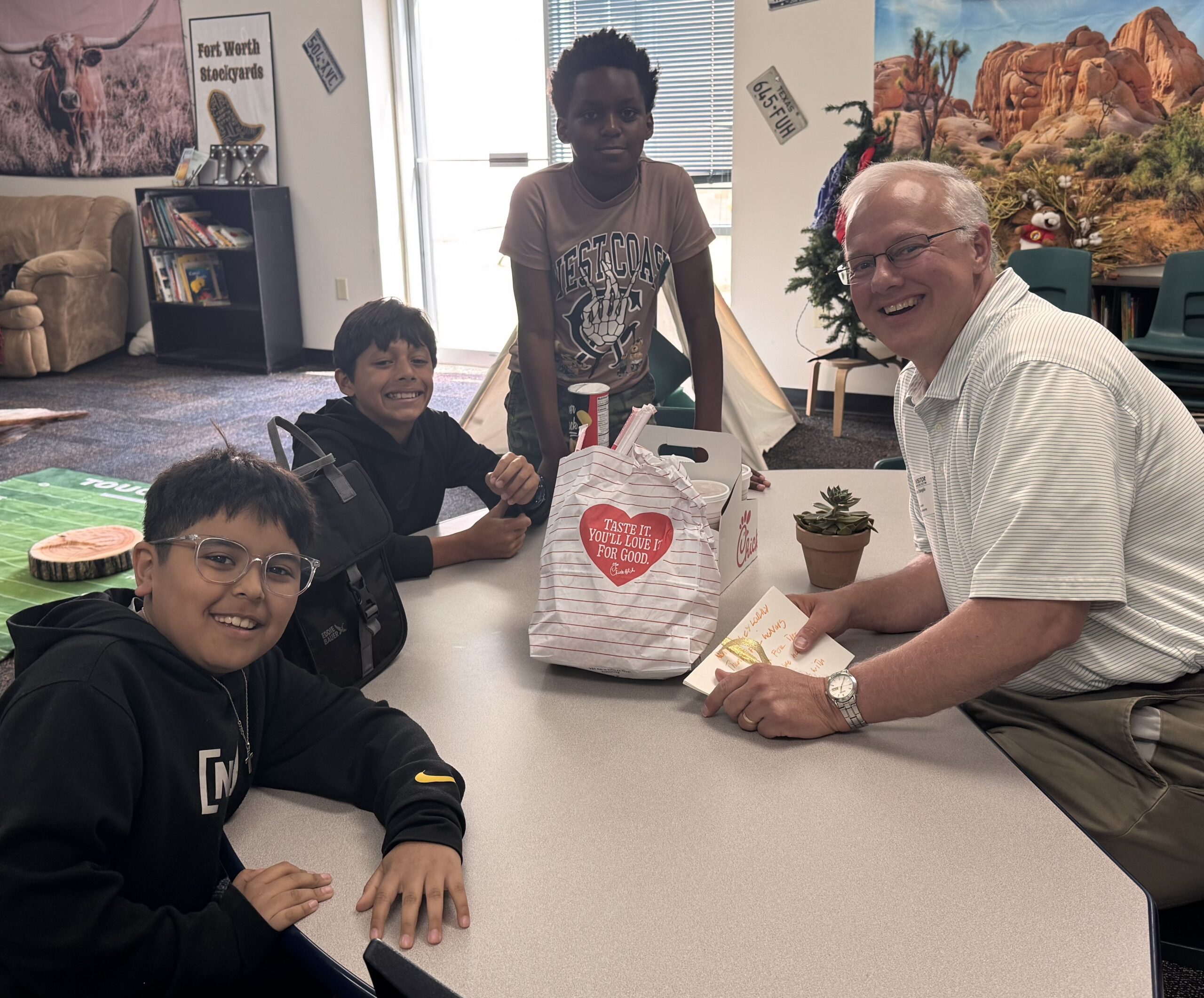
The Church can be boring. It can be self-centered and self-righteous. It can be hypocritical. It can be worldly. Very worldly. I could go on. The Church has a lot of weaknesses, yes. But the Bible says we’re seeing things right now through a dark glass. We only see a poor reflection of the reality, like looking at a cracked and clouded mirror. The Bible says we’re hoping for what we don’t see yet. And, you know, for all its brokenness and failures, the Church still looks pretty good when she’s all dressed up to worship God on Sunday. Or when she’s fist-bumping elementary students outside their school on Monday. Or feeding homeless people at Family Promise on Tuesday.

The point is that, despite all the problems, based on the words of Jesus in the Bible and our own experiences for over two-thousand years, the poor old Church knows, for better or for worse, this is the form by which the risen Christ has chosen to be present in the world. We are the Body of Christ.

So, if you’re going to have a real relationship with Jesus, you must be connected to his Body. You don’t discover Jesus by escaping his community, but by joining it. You don’t grow closer to God by seeking him by yourself, but by entering the life of his Church, by leaning into and embracing the ordinary patterns of worship, repentance, prayer, knowledge, community, Christian practice, and mission that have formed God’s people for centuries.

We do not meet Christ as isolated individuals. We meet him as devoted members of his Body. We are saved together, we are healed together, we are restored and strengthened and shaped together. When you read the earliest Christian writers, you notice that when they wrote about knowing Christ personally, it was about being united to his Body, standing shoulder to shoulder with the community he founded and submitting to the shared Scriptures and sacraments and saints. The early Christians did not describe salvation as “Me and Jesus,” but as “Us in Christ.” Baptism did not place you in a private booth with God, it plunged you into a people. The communion meal did not evoke private internal feelings about Jesus, it joined your life to the lives of all the other believers at the table.

If you’re looking for a personal relationship with Jesus, you must be where he is. If you’re looking for more in your relationship with Christ, you must be where Jesus always promised to be. In the Scriptures. In the prayers. In the supper. In the worship. In the communion of saints. In the life of his Body. And, as every member of his Body has always discovered, the closer we draw to the Church, the closer Christ draws to us.

Peace,
Allan

Body of Christ: Imitation

As the Body of Christ, God’s Church is the physical, flesh-and-blood presence of Jesus in the world. By our baptismal participation in his life, death, and resurrection, we are commissioned by Christ to do the things he did in the ways he did them for the sake of others. Why? So people will see Jesus. So people will experience Jesus. If anybody’s going to meet Jesus in this world, they’re going to do it through the Church.

Words are never enough. Not even God’s words. That’s why his Word became flesh and made his dwelling among us. That’s Incarnation. Jesus was not crucified because of his words. His words are not what changed the lives of broken people, his words are not what united fractured groups, his words are not what turned the whole world upside down. It was his presence. It was the physical things Jesus did while he was in the body. It was the healing and feeding, the forgiving and praying, the eating and sharing with all the wrong people, the refusal to recognize man-made boundaries, the lavish love, the liberal grace–that’s what got him killed. That’s what altered forever the course of history. That’s Incarnation.

Our words are never enough. The things we say in the safety of our sanctuaries aren’t going to change the world. Abstract truth doesn’t stir anybody’s heart. Theological concepts don’t compel faith and love, even when they’re true. But when that truth becomes embodied, when it’s up close and personal truth, real flesh-and-blood truth, that’s when truth gets interesting. That’s imitation. If we are to be the Body of Christ, the Church must be in the business of imitating our Lord.

The apostle Paul says he always carries around in his body the death of Jesus so the life of Jesus may be revealed, so Jesus’ life may be revealed in our (plural) mortal body (singular).

So, as the Body of Christ, we always side with the oppressed, never with the oppressors. We always stand with the minorities, we always take care of the refugees, we always protect the weak. We never discriminate, we never divide, and we never use violence or force. We always give, always forgive, and we always show love. That’s how people see Jesus, how people experience Jesus. We do the same things Jesus did in the ways he did them for the sake of others. If anybody’s going to meet Jesus today, they’re going to meet him through the Church, the Body of Christ.

Luke 3 tells us that huge crowds of people were coming to the Jordan River to be baptized by John. And the people being baptized asked John, “What shall we do?” John answered, “If you have two coats, give one of them to somebody who doesn’t have one. If you’ve got food, give it to somebody who doesn’t have any.”

Tax collectors were being baptized, and they asked, “What should we do?” John replied, “Stop stealing from people, stop taking advantage of the weak, treat everyone equally.”

Some soldiers were being baptized, and they asked, “What are we supposed to do?” John said, “Stop using threats and force to get your way, stop accusing people and lying about people.”

People are being baptized for the forgiveness of their sins, they’re going into the water for a salvation relationship with God, and the instructions are not about saying the right words or believing the right things or thinking the right way. The instructions are about doing. The expectation is for real, physical actions toward the poor; tangible concrete actions for the oppressed; flesh-and-blood actions for the outcast, the marginalized, and the exploited and the weak. Not the words we say in the safety and comfort of our church buildings, but the real actions we take in our communities; the real, physical skin-and-bones actions in the interests of others–all others!–bold, courageous, Christ-like actions that go against the grain of the culture and will cost us our reputations, our relationships, and our resources. That’s the imitation of Christ that makes the Church his body.

Our Lord Jesus is the One who brings life where it feels like death is in charge. He breaks down walls, he reconciles enemies, he forgives sinners, and he welcomes prodigals home. He brings light to darkness, he provides hope where there is despair. That’s our Lord Jesus! He is still saving people right now today! He is still forgiving and reconciling and redeeming today! That world says that’s not possible. They say Christ’s power alone isn’t enough for all the crises we’re facing, and they are wrong! The same Holy Spirit who raised Jesus from the grave and ignited the first Church is working right now, awakening hearts, renewing minds, and empowering us as the Body of Christ!

So, we faithfully love our enemies and pray for those who persecute us. Why? So people will see Jesus.

We don’t just act on behalf of all people living inside the womb who might be harmed, we also act courageously on behalf of all people living outside the womb who might be harmed. Why? So people can meet Jesus.

We forgive those who sin against us, we lay down our rights for the sake of others, we stand firmly with the oppressed. Why? So the world will know the Kingdom of God is here!

This broken world is sick and tired of the Church’s words–words–words–words–words. They’re all sick of it. This lost world desperately needs the real, concrete, physical, flesh-and-blood actions of the Body of Christ.

Peace,
Allan

Body of Christ: Incarnation

In the beginning, our God spoke words into the darkness and chaos to create light, to create the heavens and the earth. Our God spoke powerful words from a smoking mountain in the middle of the desert to bring forth a holy nation, his sacred people. Our God spoke words through his prophets in Israel–words of truth and grace, comfort and encouragement, judgment and mercy and love.

And God’s words were not enough. Words are never enough. So God’s Word became flesh. God’s Word became a body.

“The Word became flesh and made his dwelling among us. We have seen his glory, the glory of the One and Only, who came from the Father, full of grace and truth.” ~John 1:14

The holy Son of God has a body. We know Jesus has a body–a real, physical, flesh-and-blood body. Jesus ate and drank, he slept and wept, he walked and talked, he worked and played, he taught and prayed in a real skin-and-bones body. He bled real blood. He suffered bodily pain. And he died a real, physical death. Jesus died.

And when God’s Holy Spirit raised Jesus from the grave, he raised him to life in a resurrection body–a real, physical body. Our risen Lord Jesus, in his real resurrection body, was recognized by everyone who knew him. He ate and drank with his followers, whether he was invited or not. He walked and talked with them, he taught them and prayed with them. It was Jesus’ real, physical, flesh-and-blood body that proved to them he was really alive. It was remarkable.

What’s even more remarkable is that our ascended Lord Jesus is reigning right now today and forever at the right hand of the Father in heaven, but he still has a real, physical, flesh-and-blood body on this earth. Jesus still insists on being skin-and-bones present in this world. Jesus has a body. He still does.

It’s us! It’s the Church! We are the Body of Christ!

Through us, by his Church, our Lord Jesus wraps his real, physical, tangible, concrete, flesh-and-blood presence around the whole world. Today, the physical, skin-and-bones Body of Christ lives and breathes and moves and acts in Jerusalem, Judea, Samaria, and to the utter ends of the earth–even to West Texas!

That’s us. The Church.

Now, you’ll hear people say sometimes that Jesus never intended to start the Church. These are mostly well-meaning people, I think. They’ll say Jesus was a holy man; they’ll even say he’s the Son of God and the Savior of the World, but he never wanted to start what we call the Church.

Baloney!

That was his plan all along, from the very beginning of the story. Jesus started the Church when he called together that first group, that first body of twelve apostles. The Jesus Movement was always a corporate, social movement–it was never just a collection of religious individuals. The Church was always meant to be the Body of Christ. That’s the way Jesus meets people today, how Jesus interacts with people now–through his Church.

It’s not just a metaphor. This is about Incarnation. This is about who Christ is and who we are in him and what it means for the risen and reigning Son of God to remain physically present in this world through a people.

Jesus’ body, his physical presence on this earth, is the Church. They are inseparable. You can’t have Jesus without his body. You can’t know Jesus without his body. You can’t be in a relationship with Jesus outside his body. Jesus is the Church; the Church is Jesus. Seriously. That’s not just how the apostle Paul sees it (1 Corinthians 6:15, 10:16-17, 12:12, 12:27; Ephesians 1:22-23). That’s the way Jesus sees it. This is how Jesus talks about it. This is how he always planned it to be.

Saul’s on the road to Damascus when the risen Christ appears and blinds him with his divine light. “Saul, Saul, why are you persecuting me?” (Acts 9:1-19) Saul’s thinking, “I’m not persecuting you, Jesus; I’m arresting all these so-called Christians who are blaspheming Scripture.” But Jesus makes it clear that if you mess with the Church, you’re messing with him.

When Jesus sends his disciples out in Luke 10, he commands them to do the same things he’s been doing. “Heal the sick who are there and tell them, ‘The Kingdom of God is near!'” (Luke 10:9) Then he adds, “The one who listens to you listens to me; the one who rejects you rejects me” (Luke 10:16). Jesus says the exact same thing in Matthew 10:40. He says that he and the Church are functioning in the same way. Jesus sends his Church as his body on earth to do all the things he did: “I have given you the authority!” (Luke 10:19)

On that last night, at dinner with his gathered followers, Jesus says, “I tell you the truth, anyone who has faith in me will do what I have been doing” (John 14:12).

And we do! We heal the sick and proclaim the Kingdom of God! And we turn the other cheek and we go the extra mile and we love our enemies and pray for those who persecute us. Why? Jesus says, “So you can be like me. So you can become sons and daughters of our Father in heaven.”

When we forgive the ones who sin against us, people see Jesus. When we’d rather be wronged than to fight for our rights, people see Jesus. When we sacrifice and serve, when we consider the needs of others more important than our own, people will meet the Lord Jesus in us.

The Church. The Body of Christ.

Peace,
Allan

Why Did You Spill the Coffee?

I’ve been reminded over the past few weeks of an old story about a monk who was teaching his class. He asked his students this question: “If you are holding a cup of coffee when somebody bumps into you and you spill the coffee–why did you spill the coffee?”

The students answered that the coffee was spilled because someone bumped into them. The monk told them that was not the correct answer. The class pushed back. The students insisted that the person who bumped into them was at fault for spilling the coffee. The monk replied with a stern “No.”

Then he explained:

You spilled the coffee because there was coffee in your cup. That is what you were carrying. If there was tea in your cup, you would have spilled tea. If there was water in your cup, you would have spilled water. You spill what you are carrying.”

When you are bumped, when life gets difficult, when things go foul, you will spill whatever you are carrying inside you.

If you are carrying hatred, anger, or fear, and you are bumped, you will spill out hatred, anger, or fear. If you are carrying kindness, love, goodness, or compassion, and you are bumped, you will spill out kindness, love, goodness, or compassion.

So, the question is: “What am I carrying inside of me?”

Peace,
Allan


« Older posts